Integral vs Modular Helmets: Daily Use Guide 2026

Breadcrumb
Integral vs modular for daily use: what should you prioritize?
Choosing between an integral (full-face) helmet and a modular (flip-up) helmet is mostly about your daily routine: commuting speed, how often you stop, your tolerance for noise, and how much convenience matters when you’re parking, fueling, or talking at low speed. For Spain-based riders doing mixed city + ring-road miles, the “best” choice is the one that fits your head perfectly, seals well at the neck, and matches your habits.
An integral helmet is typically the go-to for maximum enclosure: less wind intrusion, a more stable feel at higher speeds, and often better aerodynamics. A modular helmet trades a bit of that simplicity for flexibility: you can flip the chin bar up at stops, which many riders find genuinely useful in daily life.
If you want the quick, decision-focused version first, the practical comparison in integral vs Modular: ¿cuál casco conviene para uso diario? helps you map your commute to the right type.
A few anchors to keep in mind as you read:
- Safety and certification matter more than the label “integral” or “modular.”
- Fit is non-negotiable; even a premium helmet is a bad helmet if it moves.
- Ventilation and visor performance decide whether you enjoy daily riding or dread it.
- For first-time buyers, fewer “features” and a better fit usually wins.
What is an integral (full-face) helmet, and why do commuters choose it?

An integral helmet (often called full-face) is a one-piece shell with a fixed chin bar. That fixed structure is the core advantage for everyday use: fewer moving parts, a consistent seal around your face, and typically a quieter ride. On fast roads, it usually feels more “planted,” because the shell and chin bar form a single aerodynamic shape.
Where it shines in daily riding
- Wind and noise management: a tighter perimeter seal can reduce fatigue on longer commutes.
- Weather protection: better coverage in rain and cold morning starts.
- Stability at speed: less buffeting when you shoulder-check or ride behind traffic.
Trade-offs to be honest about
- Convenience at stops: you can’t flip the front up, so quick chats and toll booths are less effortless.
- Heat in slow traffic: if ventilation is weak, city congestion can feel stuffy.
If you’re an enthusiast who does weekend rides too, the integral style often feels like the more “focused” tool. On the other hand, if your daily route includes frequent stops (delivery-style errands, parking garages, or lots of short hops), a modular can be more comfortable behaviorally even if the fit and seal are slightly different.
Because daily comfort is tied to airflow, it’s worth understanding how vents, channels, and exhaust ports actually work in practice. The deeper breakdown in guía de ventilación y confort en cascos is a helpful next step before you choose.
Advanced ventilation: how it works (and why it fails in traffic)
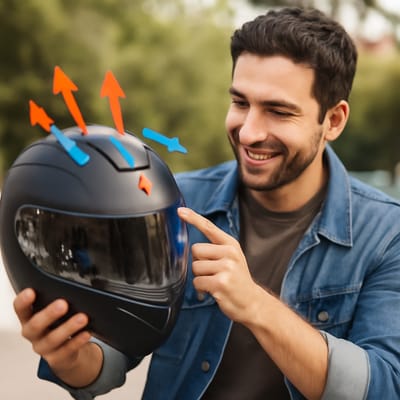
Helmet ventilation is not just “more holes = more air.” Good systems manage pressure: intake vents capture air, internal EPS channels distribute it over your scalp, and exhaust ports create low-pressure zones that pull warm, humid air out. When it’s engineered well, you feel a steady flow at 40–120 km/h without harsh drafts or whistling.
The daily-use reality check
In slow city traffic, airflow can drop dramatically. That’s why commuters often misjudge a helmet during a quick shop try-on: it feels fine indoors, but becomes warm and fog-prone at the first red light.
What to look for when comparing integral vs modular
- Chin vent effectiveness: crucial for defogging and breathing comfort.
- Brow vent placement: helps keep sweat under control in summer.
- Exhaust port size and location: determines whether hot air actually exits.
- Neck roll sealing: improves noise, but can trap heat if overdone.
Practical tips that help immediately
- Open the chin vent before you need it; it reduces fog buildup early.
- In humid mornings, prioritize a visor/anti-fog setup (Pinlock topics deserve a dedicated deep dive).
- If you ride a scooter or small-displacement bike in dense urban zones, consider ventilation plus ease of use at stops, not only highway performance.
For a more technical, Spain-relevant walkthrough of vent types and comfort trade-offs, guía de ventilación y confort en cascos goes deeper into what actually changes your day-to-day experience.
Comfort, fit, and sizing: how to avoid the #1 daily-riding mistake

The biggest daily-use failure is simple: the helmet is the wrong size and internal shape. That leads to headaches, hot spots, pressure on the jaw, and a helmet that shifts when you check mirrors. For first-time buyers, it’s especially easy to over-size “for comfort,” but that usually makes things worse once padding breaks in.
What “good fit” feels like
- Firm all around your head with no pain points after 10–15 minutes.
- Minimal movement when you hold the chin bar and gently rotate.
- Cheek pads that feel snug at first; they soften with use.
Daily-use fit checks you can do quickly
- Wear it for 15 minutes (not 90 seconds). Notice pressure on forehead and temples.
- Fasten the strap and try to roll the helmet forward off your head.
- If you wear glasses, confirm temples don’t create a leak or pressure groove.
Modular-specific fit note
With a modular helmet, pay attention to the chin bar lock and how the helmet sits when you turn your head. If it feels top-heavy or catches wind, that can become tiring on ring roads.
If you want a step-by-step method (including measuring and interpreting fit), cómo elegir la talla adecuada de casco is the most useful thing to read before you spend money.
Because fit is so personal, a printable adjustment and fit checklist is one of the fastest ways to shop smarter, compare options consistently, and avoid returning a helmet after one uncomfortable commute.
Safety and relevant certifications: what to verify before you buy
For daily riding, safety is not just impact protection. It’s also visor clarity in rain, stable retention, and a helmet that stays correctly positioned when you’re tired at the end of the day.
The essentials to verify on any helmet type
- Certification label and documentation: confirm the helmet is approved for road use in your market.
- Retention system quality: a secure strap and reliable buckle (micrometric or double D) that you’ll actually fasten correctly every day.
- Shell and EPS integrity: consistent build, no gaps, and a solid chin bar feel.
Modular-specific safety considerations
A modular helmet adds a hinge and a locking mechanism. Daily use means daily cycles of opening and closing, so durability and a positive lock feel matter. If you’re choosing modular for convenience, you still want the front to close with confidence every single time.
Safety standards and ECE-related details deserve their own dedicated guide, because the terminology (versions, labeling, and what’s actually tested) can be confusing at purchase time. The key takeaway here is simple: never compromise on certification and retention to get a lighter price tag.
If you’re shopping online, prioritize sellers that provide clear certification info, easy returns for sizing, and complete product photos showing closures, visor mechanisms, and interior padding.
Generic helmet buying guide: how to choose (with a quick comparison table)
A good daily-use motorcycle helmet is the one you’ll wear every time, in every season. That means balancing protection, comfort, and convenience against your routes and habits.
Quick comparison: integral vs modular for daily riding
| Factor | Integral (full-face) | Modular (flip-up) |
|---|---|---|
| Noise & sealing | Usually better | Good, but depends on locking/seal |
| Convenience at stops | Lower | Higher (flip-up) |
| Heat management | Depends heavily on vents | Similar, sometimes warmer at low speed |
| Long-distance stability | Often excellent | Can be excellent, but varies |
| Maintenance complexity | Lower | Higher (hinges/lock/visor parts) |
How to pick in 5 practical steps
- Start with your route: mostly urban stops → modular convenience may matter; frequent fast roads → integral simplicity may win.
- Nail sizing first: measure, test pressure points, and don’t “size up for comfort.”
- Evaluate ventilation for your climate: summer heat and humid mornings change everything.
- Check visor ecosystem: anti-fog solutions and seal quality are daily-life features.
- Set a realistic budget: pay for fit, certification, and comfort before cosmetic extras.
Price considerations (what usually moves the needle)
- Entry-level helmets can be safe, but may be noisier and less refined in vents and padding.
- Mid-range often improves comfort, visor sealing, and interior materials.
- Premium tiers commonly add better aerodynamics, quieter shells, and smoother mechanisms.
If you’re ready to click into affiliate product sheets, use a consistent checklist: certification, size/shape match, ventilation layout, visor anti-fog compatibility, and return policy. That same checklist also helps enthusiasts compare “feature-rich” options without losing sight of what matters on a 40-minute commute.
Visors, compatible accessories, and apparel compatibility
Daily use is where “small” features become big. A visor that fogs at the first cold morning or scratches easily turns your commute into a chore.
Visors and anti-fog performance
Look for a visor that seals well to the eye port, has smooth detents, and offers anti-fog compatibility. Pinlock-style systems and anti-fog coatings deserve a dedicated deep dive because performance varies widely depending on humidity, breath flow, and how you crack the visor at stops.
Practical accessories that actually help daily riders
- Chin curtain and breath deflector: can reduce fog and noise if well designed.
- Intercom readiness: speaker recesses and cable routing reduce pressure on ears.
- Emergency cheek pad release: useful for safety and removal.
Apparel and helmet compatibility
Your rider jacket collar, neck warmer, and even backpack straps can change helmet comfort. A tight collar can push the helmet upward; a thick winter layer can break the neck seal and increase noise. Try the helmet with the gear you actually wear most days.
For scooter riders, the daily routine often includes short trips, frequent stops, and storing the helmet under-seat or in a top case. That use case deserves its own dedicated recommendations and adjustment notes, because convenience and ventilation can matter more than high-speed aerodynamics.
Maintenance and care also deserves its own deep dive: visor cleaning, lining washing, and how to avoid damaging coatings are the difference between a helmet that stays pleasant and one that feels “old” after one season.
FAQ: Integral vs modular helmets for daily riding
Is an integral helmet always safer than a modular helmet?
Not automatically. Safety depends on certification, retention, correct fit, and build quality. A well-certified, well-fitting modular helmet can be a strong choice for daily use.
Which helmet type is quieter for commuting?
Integral helmets are often quieter because they have fewer openings and a more consistent seal. However, some modular models manage noise well if the chin bar locks firmly and the neck roll seals properly.
I’m a first-time helmet buyer in Spain—what should I do first?
Measure your head and prioritize fit over features, then verify certification and return policy. A simple, well-fitting helmet usually beats an over-featured one that’s the wrong shape.
I’m a motorcycle enthusiast—should I choose based on weekend rides or weekday commuting?
Choose based on the riding you do most, then confirm it still performs on your longer rides. Many enthusiasts prefer integral helmets for stability at speed, but a high-quality modular can be excellent if convenience matters.
Do modular helmets fog up more in stop-and-go traffic?
They can, especially if the chin vent and visor seal are not effective. Anti-fog compatibility and good airflow management matter more than the helmet type alone.
How often should I replace a daily-use helmet?
Replace it after any significant impact, or if the shell/retention/fit degrades over time. Even without crashes, daily wear, sweat, and UV exposure gradually reduce comfort and performance.
Are there special considerations for scooter riders using a helmet every day?
Yes. Frequent stops, storage constraints, and lower average speeds make convenience and ventilation especially important. A secure fit and clear visor in mixed weather remain the top priorities.